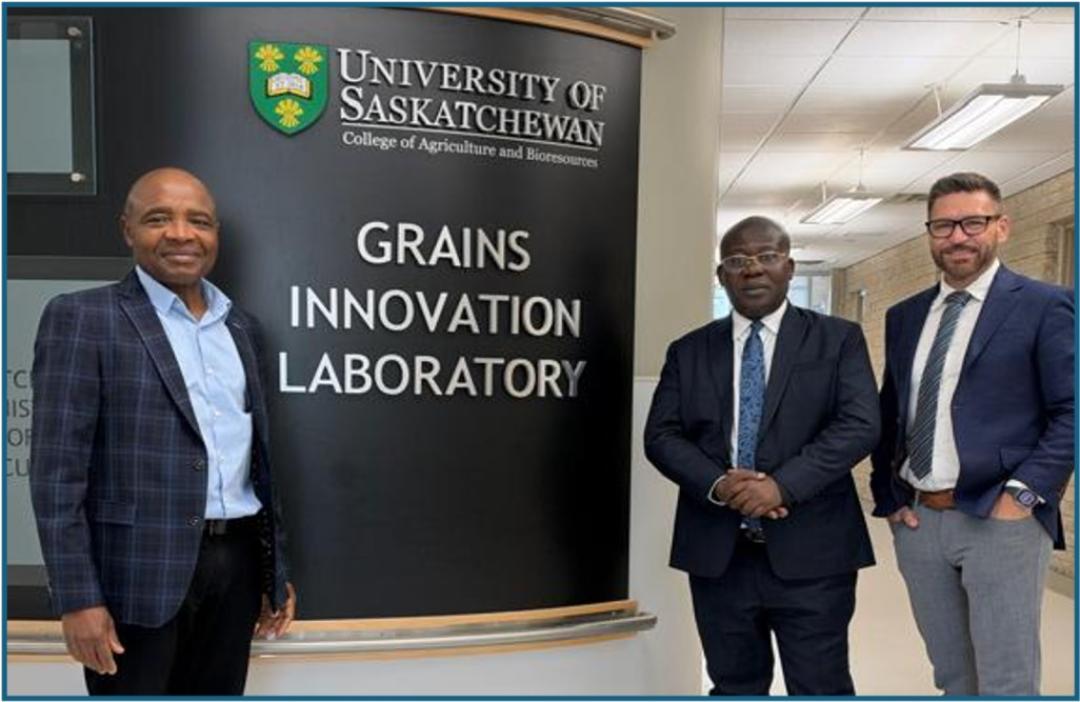
Professor Eric Yirenkyi Danquah, Founding Director of the West Africa Centre for Crop Improvement (WACCI), University of Ghana, has called on African governments, development partners and the private sector to prioritise sustained investment in agricultural research and plant breeding to strengthen food security, create jobs and drive economic transformation.
The call follows his participation in the Norman E. Borlaug International Dialogue, held in Des Moines, Iowa, USA, from October 20–22, 2026, and a subsequent visit to the Crop Development Centre (CDC) at the University of Saskatchewan, Canada. The engagements provided an opportunity to interact with agricultural research leaders and explore institutional models for financing scientific research and innovation.
Reflecting on these engagements, Prof. Danquah emphasised that plant breeding should not be viewed merely as a recurrent budget expenditure but as a strategic investment capable of delivering substantial economic returns.
Prof. Danquah was accompanied by Professor David Dodoo-Arhin, Director of Research at the University of Ghana's Office of Research, Innovation and Development, and Mrs. Barbara Dodoo-Arhin, Centre Administrator of WACCI. Prof. Dodoo-Arhin was also undertaking an institutional visit to the University of Saskatchewan.
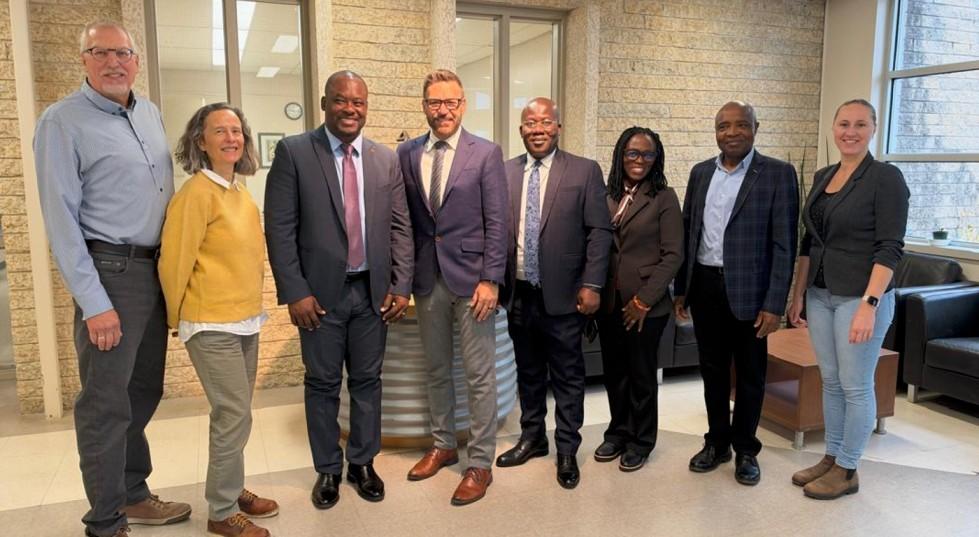
Lessons from Saskatchewan: Investing in Science for Economic Growth
Established in 1971 through the commitment of the Saskatchewan Government and the National Research Council, the CDC provides a compelling example of how sustained public investment in agricultural research can generate long-term economic benefits.
According to a 2024 economic footprint assessment by EY Canada, the Centre has released more than 500 crop varieties and generated an estimated $17.8 billion in gross farm output between 1991 and 2022. The assessment reported an $11 return on every dollar invested, a 14.9% internal rate of return, a $1.2 billion contribution to Western Canada's GDP and support for 6,938 jobs.
The CDC receives approximately $21 million annually in research funding and benefits from sustained provincial government support for strategic research chairs, research infrastructure, field operations and crop quality evaluation.
Prof. Danquah observed that this predictable core funding enables the Centre to attract competitive research grants, industry partnerships and additional investment while sustaining research programmes across generations.
WACCI's 19-Year Legacy of Scientific Capacity Development
Drawing parallels between Saskatchewan's experience and Africa's agricultural development priorities, Prof. Danquah highlighted WACCI's contribution to building the continent's scientific capacity over the past 19 years.
With catalytic funding from the Alliance for a Green Revolution in Africa (AGRA), subsequent investment through the World Bank's Africa Centres of Excellence programme and support from other development partners, WACCI has trained 133 PhD plant breeders and 73 MPhil seed scientists from 19 African countries. Through the contributions of its alumni, the Centre has also supported the release of more than 400 improved crop varieties and helped mobilise over US$160 million for agricultural research and development.
Despite these achievements, Prof. Danquah expressed concern about the sustainability of African agricultural research institutions, citing WACCI's own funding challenges. He noted that the Centre has received no funding to sustain its core programme since 2025, raising concerns about the continuity of graduate training, the retention of scientific expertise and the maintenance of essential research infrastructure.
Securing WACCI's Future
He therefore called on African governments, particularly those in West Africa, development partners, foundations and private sector organisations to establish a joint, long-term financing framework for WACCI as a regional centre serving Africa.
Such a framework, he explained, would protect previous investments, strengthen institutional stability and enable WACCI to attract additional resources through competitive grants, industry partnerships and research innovation.
The experience of Saskatchewan, he concluded, demonstrates that public funding and competitive research financing are complementary rather than competing priorities. Investing in plant breeding is ultimately an investment in Africa's food security, scientific independence, job creation and long-term economic prosperity.
As WACCI approaches its 20th anniversary in June 2027, Prof. Danquah's call presents an opportunity for African governments and development partners to consolidate nearly two decades of investment in scientific capacity development. Sustained financing will be critical to protecting these gains and enabling the Centre to make an even greater contribution to Africa's agricultural transformation.