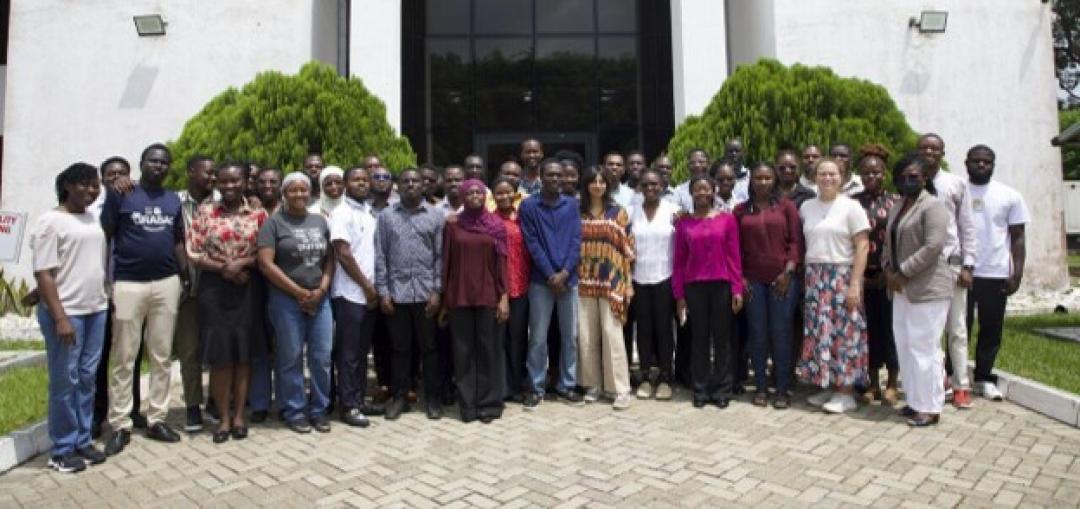
The West Africa Centre for Crop Improvement (WACCI), University of Ghana, in collaboration with the Cambridge Crop Science Centre (CCSC), University of Cambridge, has organised a two-day workshop on molecular biology techniques for plant science research.
The workshop was supported by the Mastercard Foundation and the University of Cambridge Climate Resilience and Sustainability Research Fund as part of a collaborative research project exploring the use of beneficial microorganisms, particularly arbuscular mycorrhizal fungi, as biofertilisers to promote sustainable cereal production.
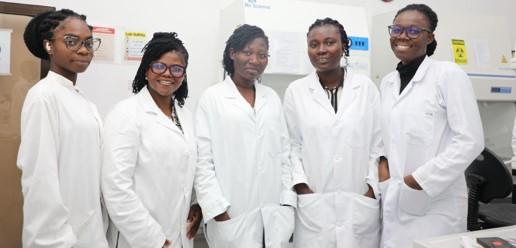
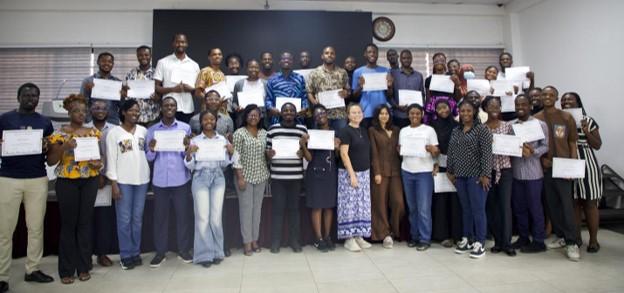
Participants with some facilitators of the workshop
Designed for graduate students, young scientists and laboratory personnel, the workshop focused on hands-on training in key molecular biology techniques. Participants were trained in accurate pipetting, CTAB-based plant DNA extraction, primer design and evaluation, polymerase chain reaction (PCR), agarose gel electrophoresis, gel interpretation and troubleshooting. Maize and rice were used as model crops to demonstrate the molecular workflow and its applications in plant breeding and crop research.
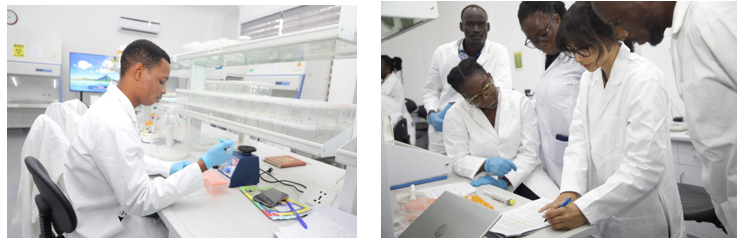
Participants engage in hands-on molecular biology training
High Demand for Hands-on Training
The workshop attracted more than 100 applications, despite having an initial capacity of 30 participants due to limitations in laboratory space, equipment and reagents. In response to the high demand, the organisers expanded participation to 41, allowing more young scientists to benefit from the practical training.
The strong interest highlighted the need for opportunities that enable young scientists to complement their theoretical knowledge with practical laboratory experience.
Sonia Paoli of the University of Cambridge, one of the workshop facilitators, said the experience went beyond the delivery of technical skills.
“This workshop was more than teaching techniques. It was an opportunity to build capacity, share knowledge and create a culture where participants can apply what they have learned and pass those skills on to others,” she said.
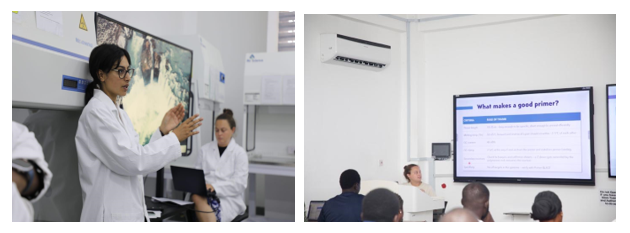
Sonia Paoli (left), Nina Foreman (right) facilitating sessions during the workshop
Sonia Paoli also commended the participants for their enthusiasm, active involvement and willingness to learn throughout the training.
Participants who comprised of students and graduates from University of Ghana, Accra Technical University and Kwame Nkrumah University of Science and Technology also expressed appreciation for the opportunity to translate their theoretical understanding of molecular biology into practical laboratory skills.
One participant who graduated form said, “Although I had theoretical knowledge of molecular techniques such as PCR and gel electrophoresis, this training gave me the opportunity to gain practical, hands-on experience. It was an excellent and well-organised workshop.”
Another participant noted that the training helped correct misconceptions and errors encountered in previous laboratory work. Primer design was also identified as one of the most valuable components of the workshop, with participants expressing interest in additional opportunities to practise and strengthen their newly acquired skills.
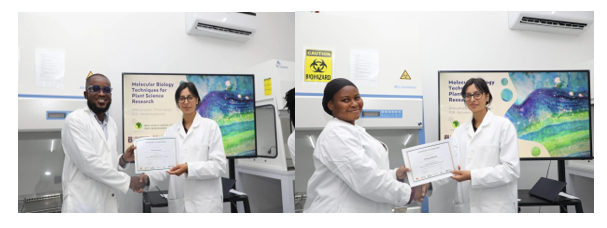
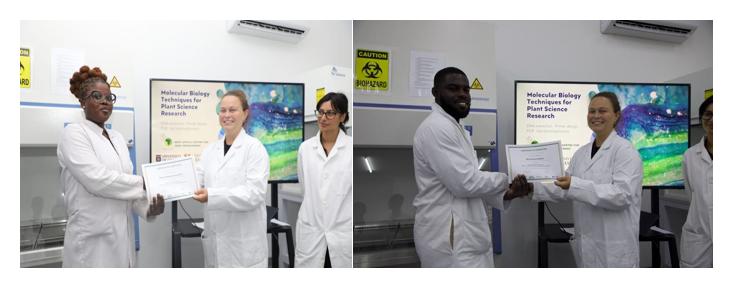
Participants receive certificates of participation at the close of the two-day molecular biology workshop
Extending the impact of research funding
Reflecting on the workshop, Dr Mavis Owusuaa Osei-Wusu, Team Lead, Rice Improvement at WACCI, described the training as one of the highlights of the research grant.
“I am grateful to have had the opportunity, through this funding, to build the capacity of young scientists and students in essential molecular biology techniques. This has been one of the highlights of the grant supporting our research on beneficial microorganisms as biofertilisers,” she said.
Dr Osei-Wusu encouraged participants to apply the skills acquired during the workshop and share their knowledge with colleagues and students. She also noted that continued support could enable similar training programmes to reach more scientists and provide additional opportunities to practise and apply the techniques acquired.
WACCI expressed appreciation to the Mastercard Foundation and the University of Cambridge Climate Resilience and Sustainability Research Fund for supporting the workshop. The Centre also acknowledged CCSC, the facilitators, technical team and participants for their contributions to the training.
The workshop demonstrated how research projects can combine scientific research with practical skills development. By strengthening the technical capacity of students, researchers and laboratory personnel, the project is contributing to stronger research capacity in plant science, crop improvement and sustainable agriculture.