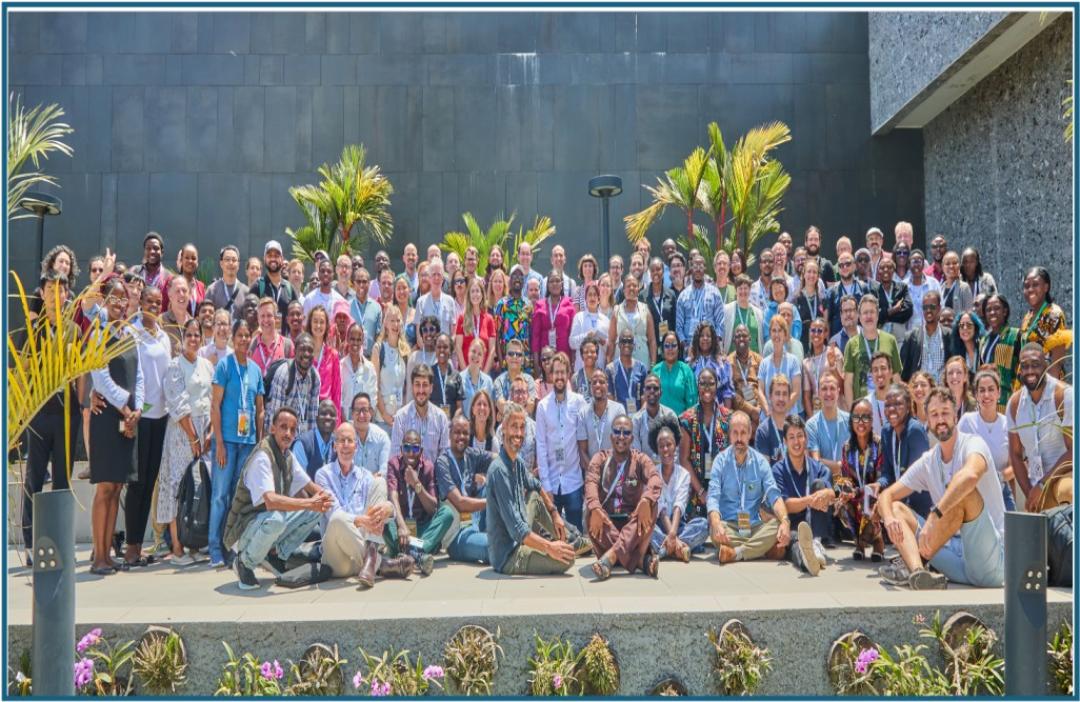
The West Africa Centre for Crop Improvement (WACCI), University of Ghana, in collaboration with the International Plant Phenotyping Network (IPPN), hosted the 9th International Plant Phenotyping Symposium (IPPS9) in Accra from 12 to 16 October 2026, marking the first time the international symposium has been held in Africa.
Held under the theme “Phenotyping for All: Bridging the Gap in Global Agriculture,” the symposium brought together more than 200 participants from 40 countries across Africa, Asia, the Americas and Europe. Scientists, plant breeders, early-career researchers, industry representatives and development partners discussed advances in phenotyping and opportunities to accelerate crop improvement.
The five-day programme featured keynote addresses, scientific presentations, workshops, posters sessions, industry exhibitions and networking sessions. Discussions explored artificial intelligence, advanced imaging, high-throughput phenotyping and data-driven approaches to understanding crop performance in changing environments.
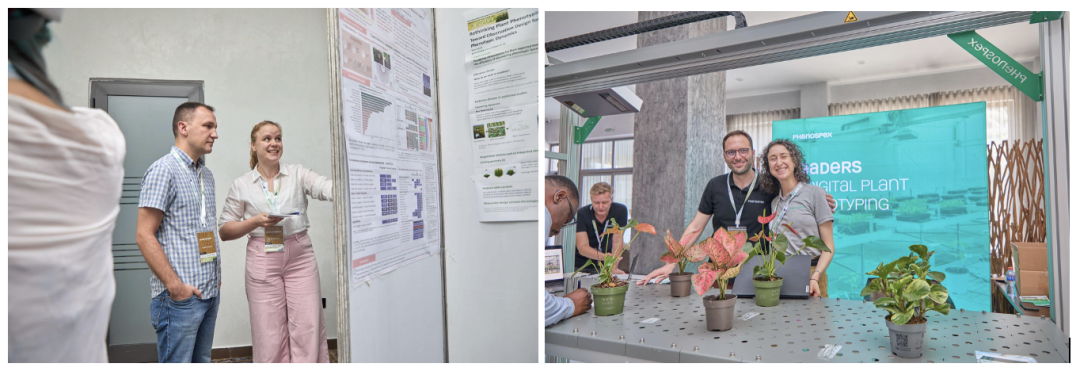
Poster viewing and exhibition session
Advancing Africa’s Role in Global Plant Science
In his opening address, Professor Eric Y. Danquah, Founding Director of WACCI, described IPPS9 as an opportunity to strengthen Africa’s contribution to global plant science and demonstrate the continent’s capacity for scientific discovery and innovation.
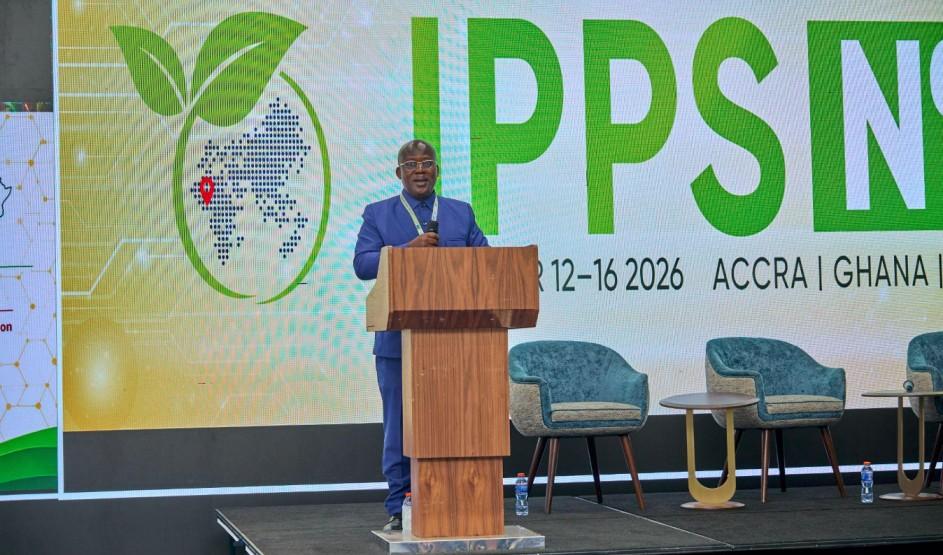
Professor Eric Y. Danquah delivering the welcome address
He highlighted Africa’s diverse crops, agroecological environments and farming systems as important resources for understanding plant responses to climate change and other stresses. He urged the global research community to recognise African institutions not simply as recipients of technology, but as partners in generating knowledge and developing innovations.
Drawing on WACCI’s experience in building capacity in crop improvement , Professor Danquah stressed that sophisticated equipment alone cannot deliver lasting scientific progress. Skilled researchers, technical support, sound data systems and strong institutions are equally necessary. He called for sustained international partnerships and more equitable access to phenotyping technologies, expertise and research opportunities, with results ultimately measured by improvements in crop productivity and food and nutrition security.
Professor Jennifer Clarke, Chair of IPPN and Director of the Quantitative Life Sciences Initiative at the University of Nebraska–Lincoln, highlighted the significance of the symposium’s first African edition. She welcomed deeper collaboration with African scientists and institutions and emphasised regional partnerships, knowledge exchange and shared scientific infrastructure as ways to make plant phenotyping more accessible.
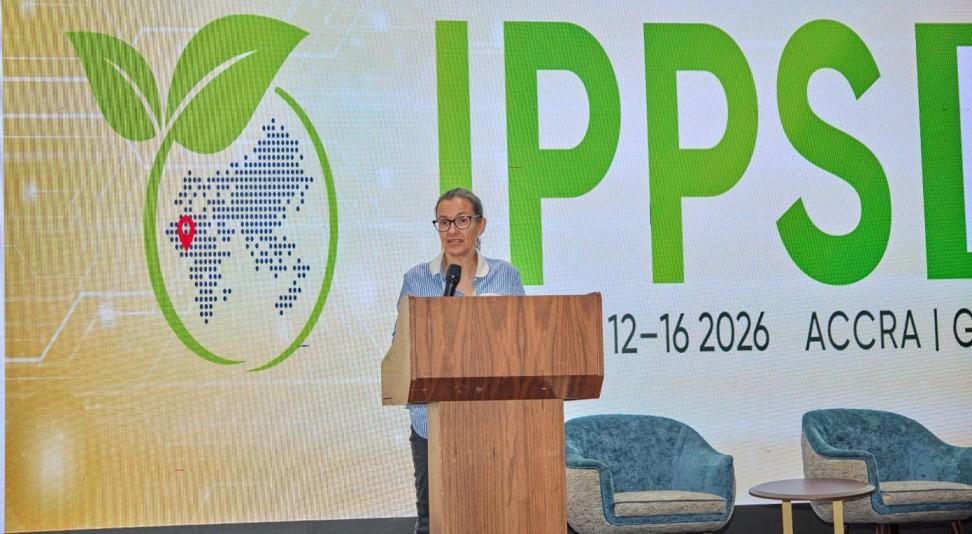
Prof. Jennifer Clarke delivering her opening remarks
Keynote Addresses Highlight Advances in Plant Phenomics
Keynote speakers included Professor Michael Gore of Cornell University, USA; Professor Ioannis N. Athanasiadis of Wageningen University & Research, the Netherlands; Dr Ndjido A. Kane of CERAAS, Senegal; Dr Vincent Vadez of the French National Research Institute for Sustainable Development (IRD); Dr Yusaku Uga of Japan’s National Agriculture and Food Research Organization (NARO); Dr Alonso Zavafer of Brock University, Canada; Richard Dickmann of the Australian Plant Phenomics Network; and Dr Busie Maziya-Dixon, formerly of the International Institute of Tropical Agriculture (IITA).
Their presentations addressed multiscale phenomics, artificial intelligence and digital twins, field phenotyping under climate extremes, precision breeding, root and rhizosphere imaging, and the links between plant traits, nutritional quality and human health. Speakers also examined how multidisciplinary research and public-private partnerships can translate technological advances into practical crop improvement.
Scientific Presentations, Workshops and Regional Network Updates
Technical presentations, posters and early-career flash talks covered high-throughput phenotyping, imaging, root architecture, climate resilience, predictive modelling and data management. Specialised workshops explored phenomics as an emerging discipline, seed and germplasm phenotyping, and controlled-environment phenotyping.
Regional network updates featured presentations on EMPHASIS, the European Research Infrastructure for Plant Phenotyping; the Australian Plant Phenomics Network; the North American Plant Phenotyping Network; and developments in plant phenotyping research in China and across the emerging Pan-Asian Plant Phenotyping Network.
The exchanges highlighted opportunities for shared infrastructure, compatible research approaches and international collaboration.
The Early Career Professionals Network (ECPN) organised flash presentations and, with WACCI, a session titled “The Next Generation of African Plant Breeders.” The session gave emerging African scientists an opportunity to present their research and connect with the international phenotyping community.
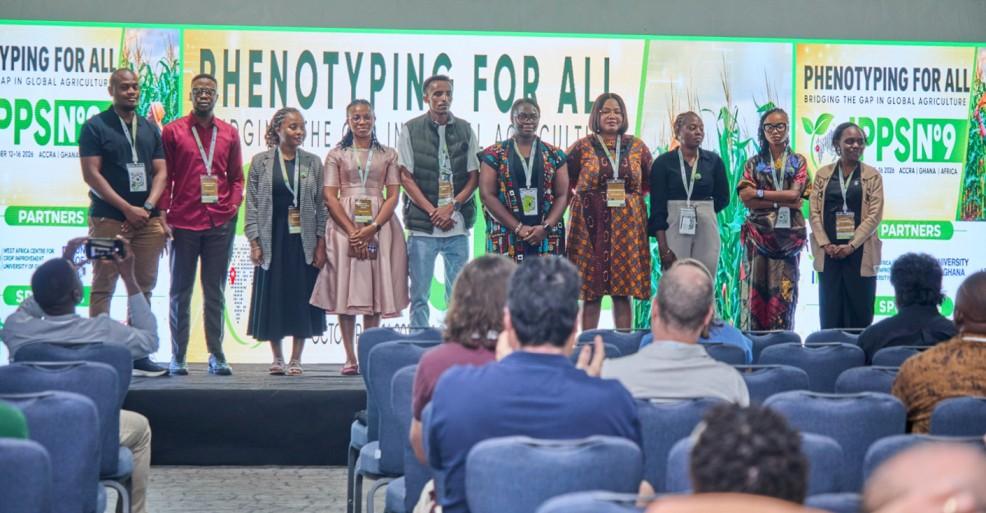
Young African Researchers who presented their work
Launch of the Pan-African Plant Phenomics Network
A major milestone was the official launch of the Pan-African Plant Phenomics Network (PAPP-Net). The initiative aims to connect scientific talent, universities, research institutions and phenotyping facilities across Africa to strengthen collaborative research, advanced training, technology sharing and crop improvement. It seeks to position African scientists as active contributors to global phenomics research.
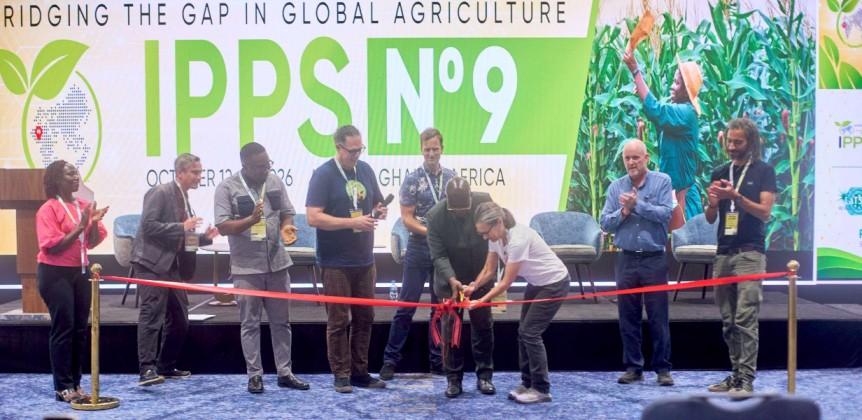
Ribbon cutting at the launch of the Pan-African Plant Phenomics Network (PAPP-Net)
At the closing ceremony, Professor Clarke announced that the President of the African Plant Breeders Association (APBA), in consultation with the IPPN Board, had unanimously appointed Professor Eric Y. Danquah as Founding Champion and Committee Chair of PAPP-Net. He was entrusted with leading the establishment of an independent, world-class African network, with APBA and IPPN as founding partners. Professor Danquah accepted the responsibility and pledged to work with African and international partners to build a sustainable institution for research, training and crop improvement.
Advancing African Phenomics Through Investment and Collaboration
In his conference dinner talk, “The Gap Gets Bigger: How to Advance Phenomics and Train Phenomicists in Africa,” Professor Danquah argued that the widening divide in phenomics is not simply a shortage of equipment. Africa needs stronger scientific institutions, multidisciplinary teams, advanced training and sustained partnerships. Drawing on WACCI’s experience, he proposed five interconnected, world-class regional ecosystems across Africa, built around existing institutional strengths and linked through PAPP-Net.
The dinner also featured donations of specialised plant phenotyping equipment to WACCI by two Netherlands-based companies, PhenoVation and Phenospex, demonstrating how industry partnerships can strengthen African research and training.

PhenoVation presents the PlantExplorer XS imaging system and financial support to WACCI
Vincent Jalink, Chief Commercial Officer of PhenoVation, presented a PlantExplorer XS imaging system for studying photosynthesis and plant stress, together with financial support for WACCI. Dr. Grégoire Hummel, Chief Executive Officer of Phenospex, presented an automated TraitFinder and PlantEye F600 phenotyping system designed to measure plant growth, architecture and performance.
The equipment will expand WACCI’s ability to integrate advanced phenotyping into crop improvement research and postgraduate training. The contributions illustrate the practical value of partnerships between African scientific institutions and international technology companies.
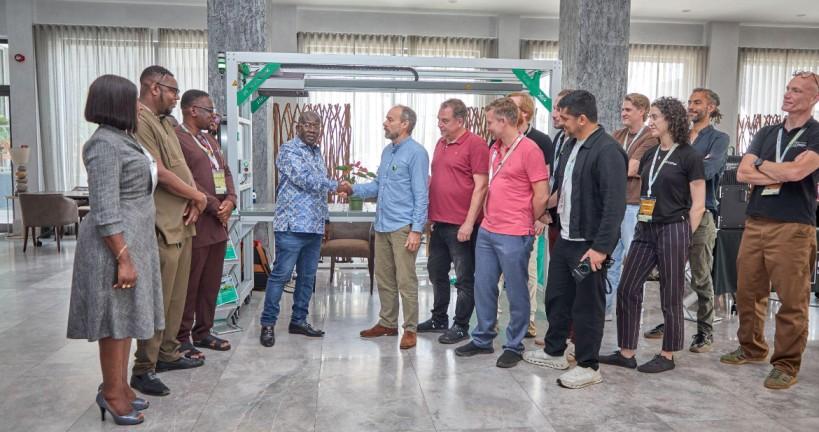
Phenospex presents the automated TraitFinder and PlantEye F600 phenotyping system to WACCI
IPPN General Assembly
IPPN held its General Assembly during IPPS9, with members reviewing the network’s activities and progress. The meeting was moderated by Philipp von Gillhaussen, IPPN Executive Director.
IPPN Treasurer Rick van de Zedde presented the financial report and was re-elected Treasurer.
New Zealand was announced as host of the next International Plant Phenotyping Symposium. Dr Kioumars Ghamkhar, Director of the Margot Forde Genebank at the New Zealand Bioeconomy Science Institute, introduced the host country and the forthcoming meeting.
ECPN General Assembly
The ECPN also held its General Assembly during IPPS9. Moderated by Edwin Tapiwa Toreveyi, the meeting reviewed the network’s activities and provided an opportunity for leadership candidates to present their priorities.
Strengthening Africa’s Contribution to Agricultural Research
As the first International Plant Phenotyping Symposium held in Africa, IPPS9 marked a significant step towards broader participation in global phenomics. Its scientific programme, network discussions and industry partnerships showed the value of African research priorities, local expertise and equitable access to technology. The launch of PAPP-Net provides a platform for turning the connections made in Accra into sustained scientific capacity and practical advances in crop improvement.