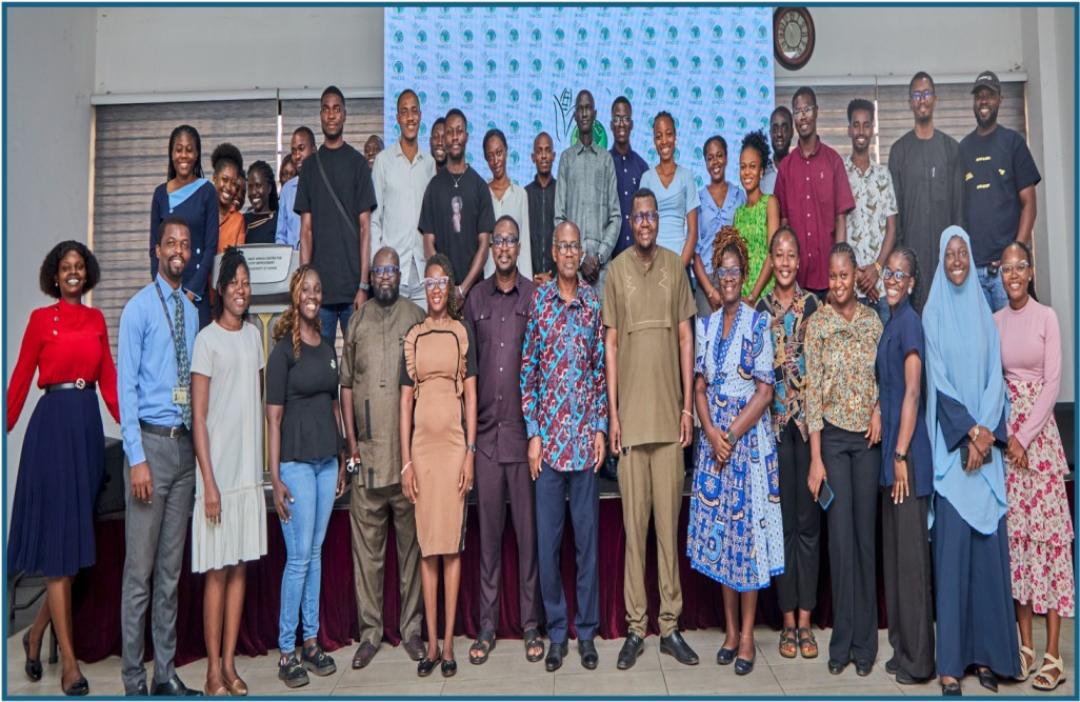
The West Africa Centre for Crop Improvement (WACCI), University of Ghana, on November 10, 2026, held an orientation for its 11th cohort of MPhil Seed Science and Technology students at the Centre’s Auditorium.
The new cohort comprises 23 students, including 10 females and 13 males, from six African countries: Ethiopia, South Sudan, Benin, Zambia, Nigeria and Ghana. The students are supported by the DAAD In-Country/In-Region Scholarship Programme to pursue their studies at WACCI.
The latest intake brings the total enrolment in WACCI’s MPhil Seed Science and Technology programme to 133 students from 13 African countries since its inception in 2015.
Welcoming the new cohort, the Director of WACCI, Prof. Daniel Dzidzienyo, gave a brief introduction to the University of Ghana, highlighting its mission, vision and values. He also outlined WACCI’s operations and reassured the students that the Centre’s faculty and administrators are committed to providing an enriching academic experience throughout their programme.
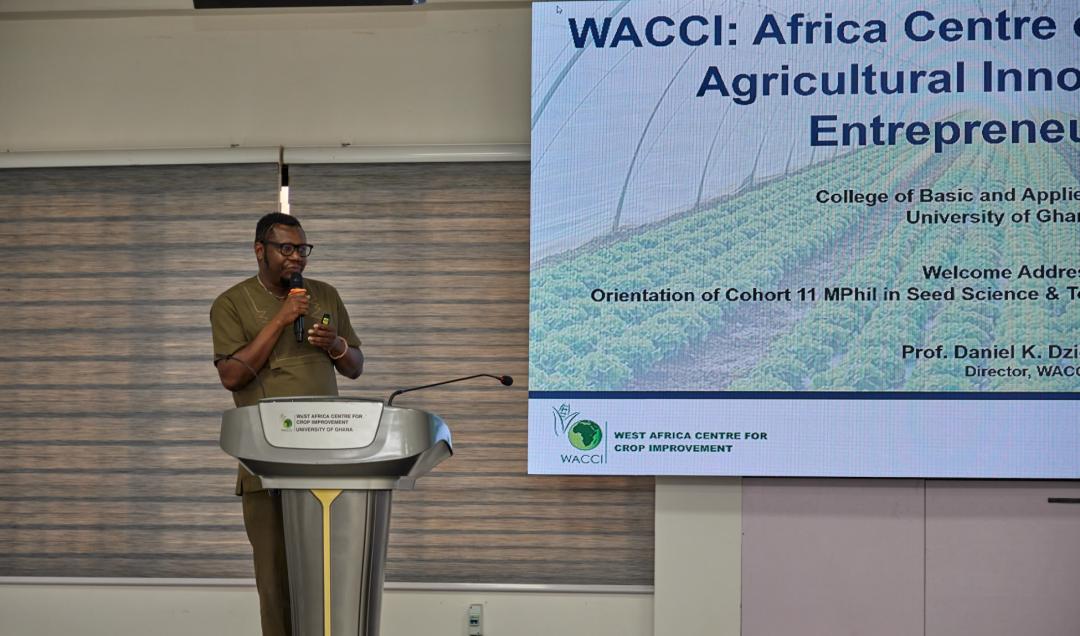
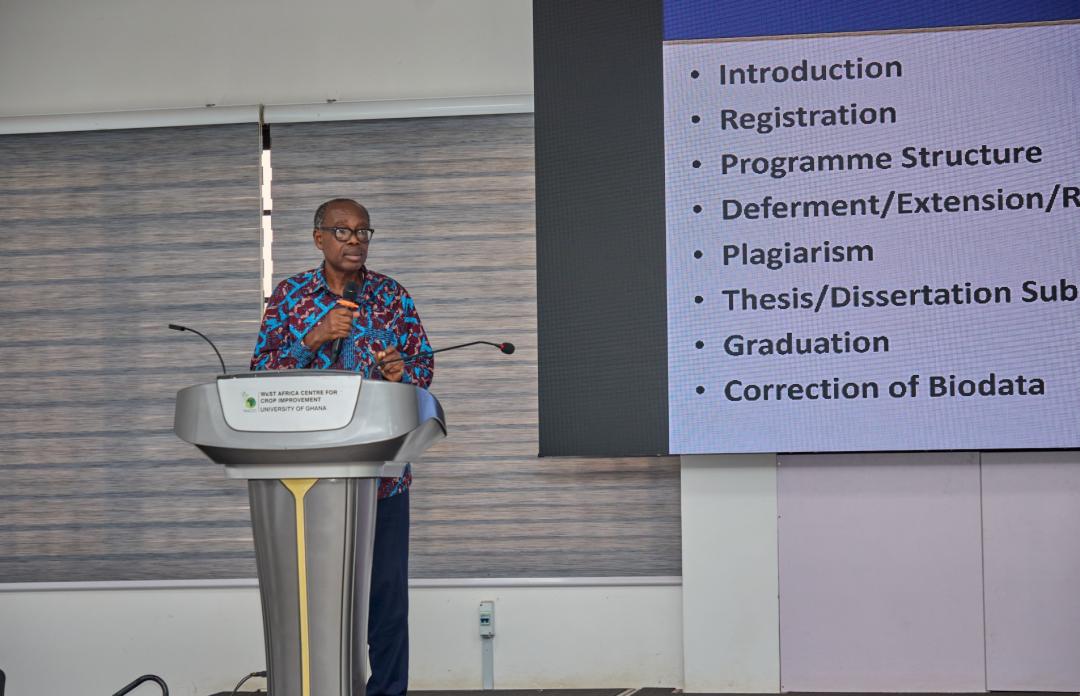
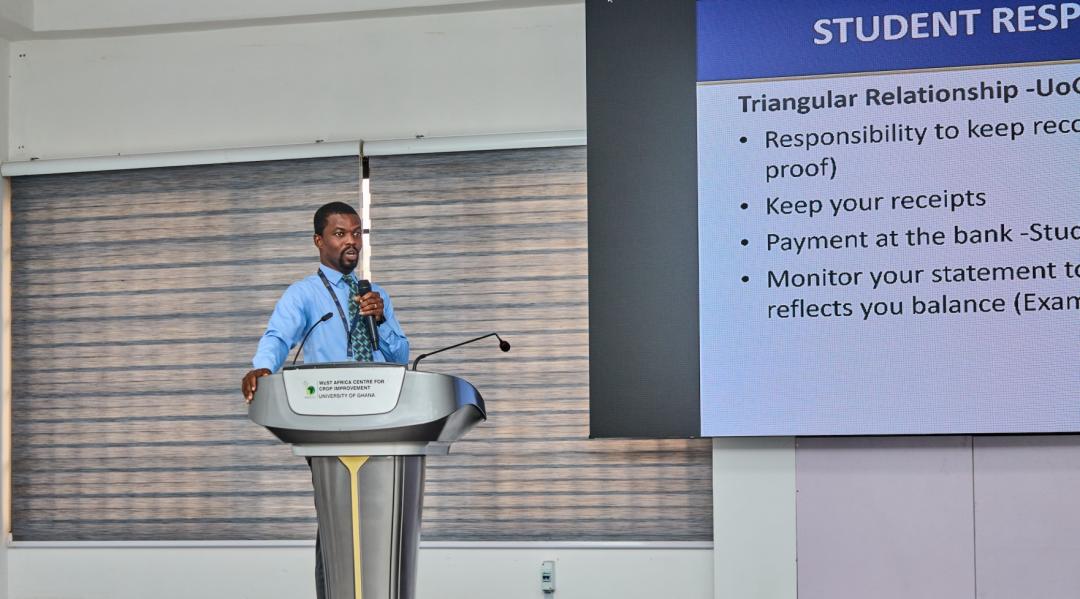
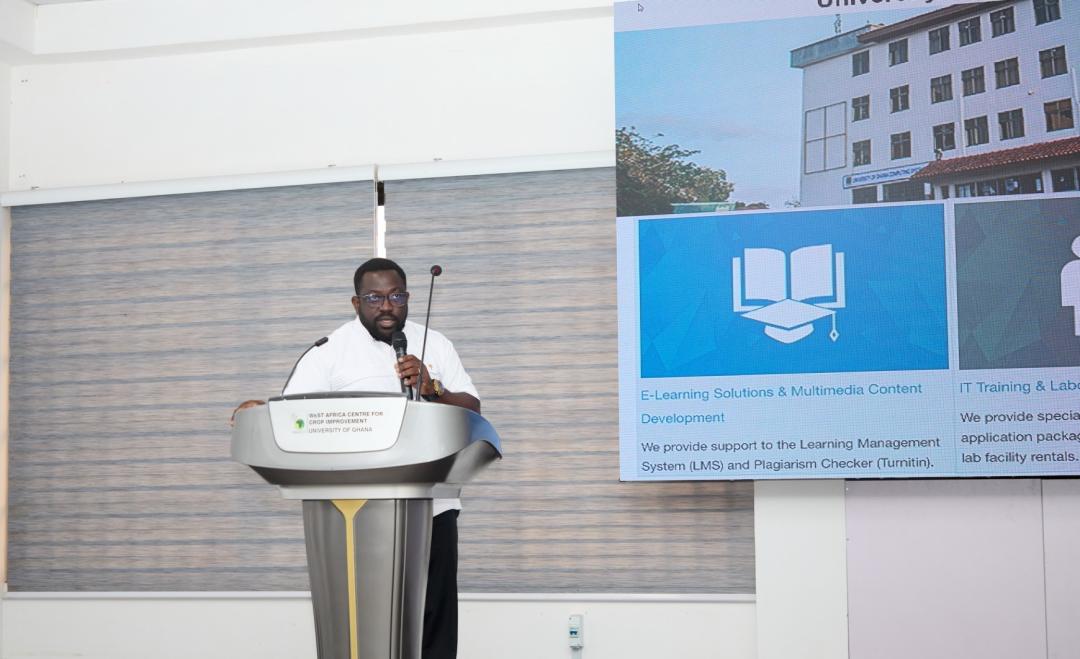
Also speaking at the orientation were the Associate Director of Academic and Student Affairs, Prof. Kwadwo Ofori; the Deputy Director of WACCI, Dr. Agyemang Danquah; the Finance Officer, Mr. Alexander Asante Atuobi; and the Team Lead, ICT, Mr. Francis Turkson. They took turns engaging the students on various aspects of their academic journey, as well as the resources and support available to them at WACCI and the University of Ghana.
About WACCI’s MPhil in Seed Science and Technology Programme
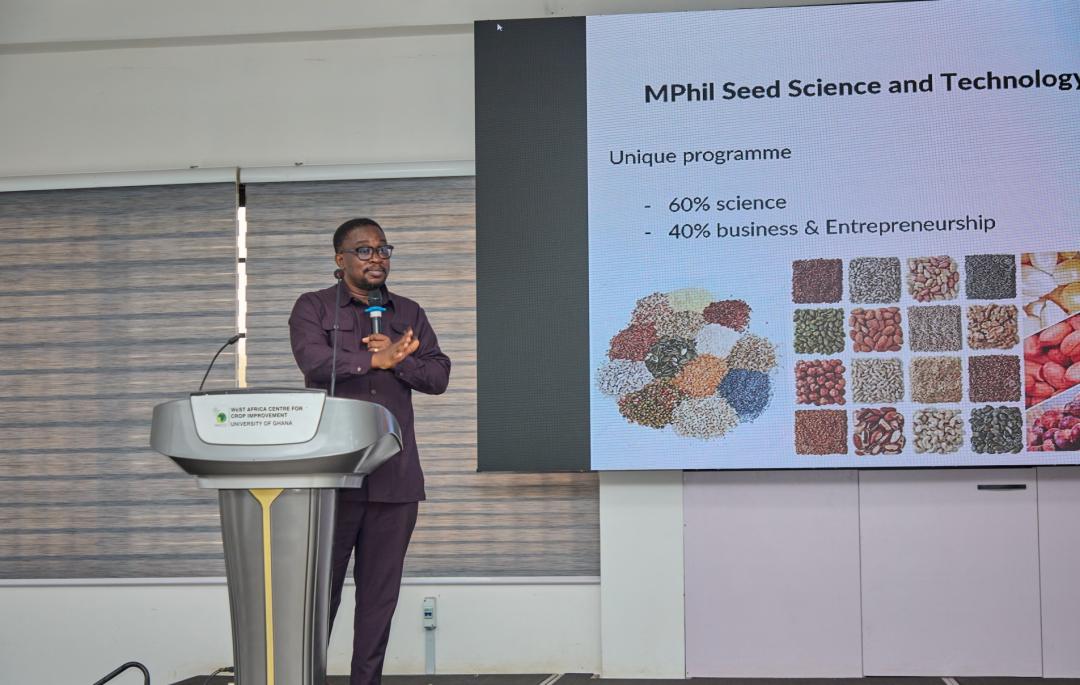
The MPhil in Seed Science and Technology is an innovative two-year programme. Under this programme, students begin with nine months of coursework at the University of Ghana, followed by a six-week to three-month practical attachment at either a national plant breeding programme or a private seed company, and a final year dedicated to research work.
The programme offers interdisciplinary training that emphasises the development of problem-solving and analytical skills. It combines current instruction in seed science and technology with essential modules in business management, providing students with a rigorous and integrated curriculum. The programme seeks to develop a network of broadly trained professionals capable of improving access to high-quality seeds.